Telling a story that belongs to you requires a lot of courage, especially when you are not entirely sure what the truth will reveal. Sometimes, we make and write things not because we have understood an experience, but because we are still trying to. In my view, that is where art begins: in the space between what we have lived and what we are finally ready to face.
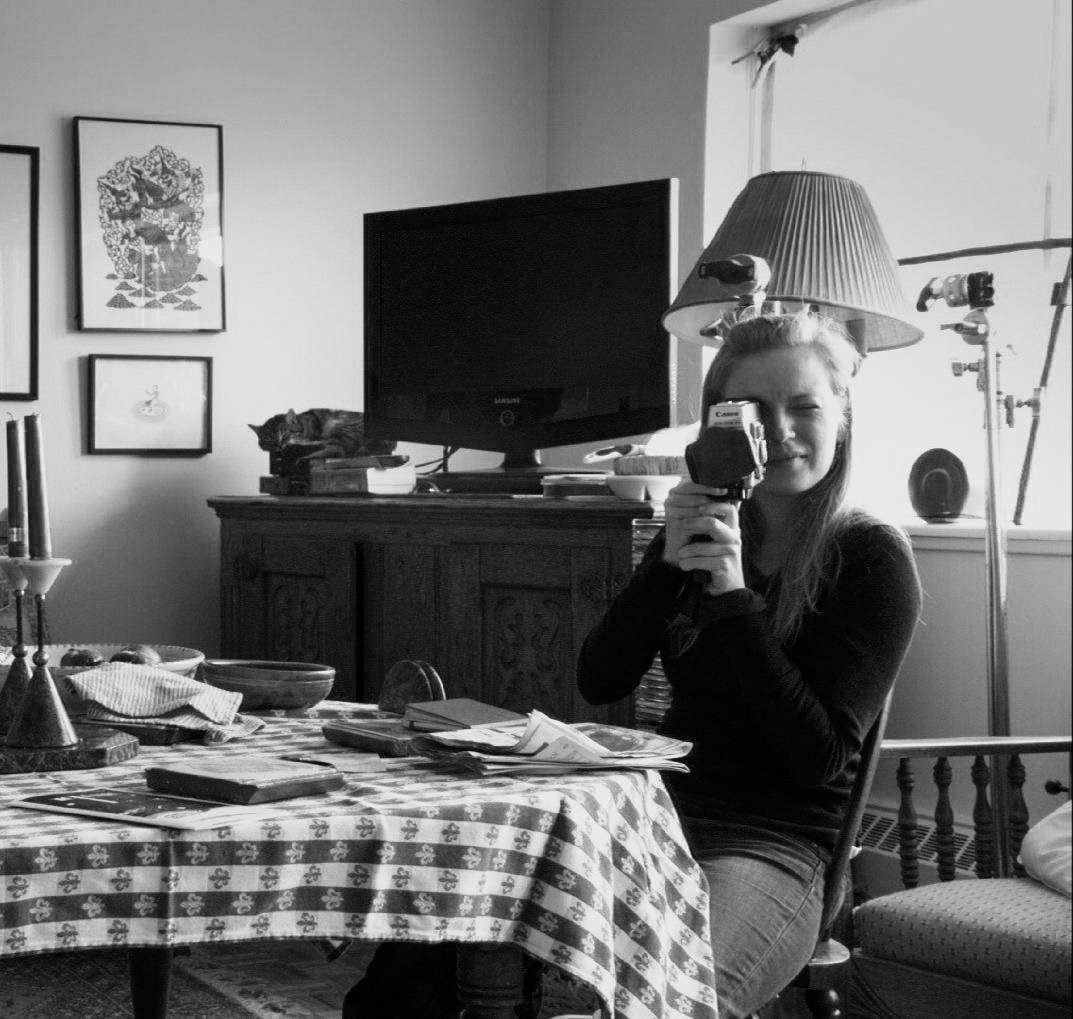
Sarah Polley’s Stories We Tell is one of the most emotionally powerful films I have ever seen. Turning her camera toward her own family, Polley revisits the life of her mother, Diane, and a family history shaped by secrets, conflicting memories, and unanswered questions. At first, it begins as an attempt to understand the past, but as the film evolves, it becomes something more intimate: an effort to know her mother beyond the version she inherited. Through interviews, home-movie footage, and reconstructed memories, she tries to piece together a person who can no longer tell her own story.
What surprised me about the film is that Polley does not approach this history as a mystery to be solved and put away. Instead, she allows the act of making the film to become part of the discovery. Each person remembers differently; every account reveals something while leaving something else out. The closer she gets to the story, the more complicated it becomes. What I took from the movie was exactly that: to truly look at someone is to accept that loving them does not mean knowing everything about them.
I often think about art as a form of catharsis, although I am not sure that creating something necessarily means finding closure. Sometimes, the process simply gives us a way to sit with what we cannot resolve. We return to a memory, revisit a relationship, or give shape to a feeling that has remained difficult to articulate. In doing so, we may discover that we were not only trying to understand what happened, but also who we became because of it.
I really admire artists who decide to make a personal story public, whether in the form of writing, directing, or painting: IT IS EXTREMELY VULNERABLE. Because of this, the outcome usually tends to be exceptional. To create honestly means accepting that we cannot fully control how others will interpret what we reveal. It means allowing contradictions to remain, resisting the temptation to make ourselves look better, and admitting that our own perspective may be incomplete. Today, it also means letting go and making peace with the fact that nothing we share online is ever truly erased, because of our digital footprint, and choosing to share it anyway. It is much easier to tell a story in which everything makes sense, in which everyone has a clear role and every wound eventually becomes a lesson. Real life rarely offers that kind of resolution.
Polley’s film feels brave because it does not attempt to turn her mother into a single, definitive character. Instead, it allows her to exist through the memories of others, as someone loved, remembered, misunderstood, and ultimately unknowable in certain ways. In telling her mother’s story, Polley also reveals the limits of her own understanding. The film becomes not only a portrait of Diane, but an acknowledgment that there will always be parts of the people we love that exist beyond us.
Watching the film, I found myself thinking about how extraordinary it would be to have someone do the same for us: to take the time to sit with the people who have loved us, who have shared different chapters of our lives, and piece together the many versions of who we have been. To be seen not through a single role (a mother, a wife, a friend, a daughter) but as a whole, flawed human being, full of contradictions. Someone whose life cannot be summed up by one relationship or one defining characteristic, but whose story reveals itself through the accumulation of all the lives they have touched. And perhaps, somewhere beneath all those different accounts, there would be a thread connecting them all. In Diane’s case, I couldn’t help but feel that thread was love: the desire for it, the search for it, and the ways it shaped her life.
This is one of the things art can do that life rarely allows us to do so deliberately: give us the opportunity to return. To look again at the people we thought we knew, to ask questions we may have been afraid to ask, and to make room for truths that complicate rather than resolve our feelings. The work itself becomes a way of getting closer, even when complete understanding remains impossible.
I don’t know if making something honest necessarily heals us. Perhaps it does not erase the pain or provide the answers we hoped to find. But it can transform the way we carry an experience. It can turn something private and difficult into something that can be examined, shared, and understood differently by someone else. Sometimes, we create not because we have found the truth, but because we are finally ready to search for it.