Lately, we’ve all been ambushed by all of this Let Them Theory propaganda by Mel Robbins: if your friends do this, let them; if they drift away, let them; if they don’t show up the way you hoped, just let them. The message is everywhere, packaged as empowerment, detachment, and emotional maturity. I personally had never thought of myself as someone who had gone through a breakup—or at least not until I started thinking about friendship this way. But what exactly is a breakup, and why do we always feel the need to diminish friendship breakups?
We usually reserve the word “breakup” for romantic relationships, as if only those carry enough emotional weight to fracture us. When a friendship ends, we call it “growing apart,” “life getting busy,” or “just a phase.” We downplay it, file it under something softer, more acceptable. Yet the loss of a friendship can be just as disorienting as the end of a romance, sometimes more. Friendships hold years of shared language, rituals, and versions of ourselves that exist only within that bond. When they dissolve, it can feel like losing a witness to your life.
Part of the issue is cultural: we don’t have scripts for friendship grief. There’s no socially sanctioned mourning period, no universally agreed-upon breakup playlist, no expectation that you’ll need time to recalibrate. If anything, we’re encouraged to be chill about it, or at least I was. Enter the Let Them mentality, which can be helpful in moments of clarity but also dangerously convenient as a way to avoid confrontation, repair, or even acknowledgment of hurt. “Let them” can quickly become “don’t feel.”
But friendship breakups are real. They can stem from misalignment, unmet expectations, changing values, or simply the slow erosion of effort. They often happen quietly, without a defining moment, which makes them harder to name. One day you realize you no longer tell this person the small things. The intimacy has thinned. The rhythm is gone.
I’m someone who loves with my whole soul. I tend to live in extremes, very black or white, and I’m still not sure whether that’s a strength or a flaw. What this process has taught me, though, because it is a process, is that I can’t fake connection. If we’re not okay, or if things haven’t felt the same between us for quite some time, I believe I owe it to myself and to the other person not to show up in a half-hearted way. I’d rather be honest about the distance than pretend everything is fine.
Maybe the point isn’t to reject the Let Them philosophy entirely, but to understand it differently. Let them drift away. Let them show up inconsistently. Let them choose not to invest in the relationship the way they once did. Let them choose not to choose, convincing themselves that neutrality is the kindest option. Let them be exactly who they are. We can’t control other people, and perhaps we shouldn’t try. But “let them” doesn’t mean abandoning ourselves in the process. It also means recognizing when something no longer feels mutual and having the courage to say: this is where I stop. Sometimes the healthiest thing we can do is allow people to be exactly who they are while deciding, for ourselves, where our boundaries begin.
Not every friendship is meant to last forever, but that doesn’t mean it didn’t shape you, hold you, or matter deeply while it did. If we allowed friendship breakups the same emotional legitimacy as romantic ones, we might navigate them with more honesty and less shame.
If you ever find yourself in that space, where something feels off and you’re unsure how to show up, start with honesty, at least with yourself. Give yourself permission to pause and reflect before forcing interactions out of habit or guilt. Sometimes the kindest thing you can do for everyone involved is to stop performing closeness and instead choose clarity, even if it’s uncomfortable. Boundaries don’t have to be dramatic to be real; they can be thoughtful, and rooted in respect for your emotional energy.
To make the process a little more bearable, a few things helped me along the way. Naming the loss for what it was allowed me to stop minimizing it. It also helped to resist the urge to either over-romanticize or demonize the relationship, and instead hold it in its full complexity: it mattered, and it changed. Redirecting my energy toward friendships and spaces that felt reciprocal reminded me that meaningful connections still existed. Most importantly, I learned to let the timeline be messy. Healing from friendship loss isn’t linear, and accepting that inconsistency became part of the process itself.
Wellbeing extends far beyond physical health. It is shaped just as much by our emotional lives—the friendships we nurture, the losses we carry, and the boundaries we learn to set. Exploring these experiences acknowledges that wellness is not simply about feeling good, but about understanding and caring for the full complexity of being human.
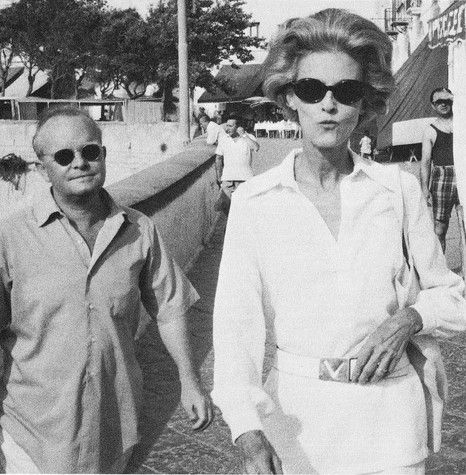
Unknown photographer; ‘Truman Capote and Babe Paley‘, circa 1970