There was a time when encountering art meant surrendering to it. You stood in front of a painting, sat through a performance, or listened to a piece of music, and for a brief moment, the rest of the world dissolved. Art demanded presence. It asked nothing more than your attention – and in return, it gave you something deeply human: a feeling, a question, a shift.
Today, that relationship feels different.
Now, before we even allow ourselves to feel, we reach for our phones. We frame the moment, adjust the lighting, capture it, and share it. The instinct is almost automatic. While this habit extends far beyond a single generation, it feels especially pronounced in an era where documenting life has become second nature. Instead of asking “What does this make me feel?”, we ask “How will this look?”
We are no longer just experiencing art–we are documenting it. And I’m not outside of this. I’m part of it too. I’ve caught myself standing in front of something powerful, something that should have held me still, and instead of staying in that moment, I reach for my phone. I tell myself I’ll look at it later, that I don’t want to forget – but in trying to preserve it, I interrupt it. I step out of the experience to capture evidence that it happened.
This shift isn’t necessarily about superficiality. It’s about mediation. Every experience is filtered through a lens – literally and metaphorically. The act of recording creates distance. It turns a living, breathing moment into content. Something to be archived, posted, and validated. And in that process, something subtle is lost.
When we document art, we step slightly outside of it. We become observers of our own experience, curators of a moment rather than participants in it. The painting becomes a backdrop. The concert becomes a clip. The exhibition becomes a series of images stitched together for an audience that isn’t even there. Ironically, in trying to preserve the moment, we often fail to fully live it.
There’s also a quiet pressure beneath all of this–the need to prove that we were there, that we saw it, that we matter within the cultural conversation. Documentation becomes a form of social currency. The experience itself is no longer enough; it must be shared to be validated.
But art was never meant to be consumed this way. Art is intimate. It’s messy, ambiguous, sometimes uncomfortable. It unfolds differently for each person, and often, its impact can’t be captured in a photo or a video. A screen flattens what is meant to be felt in depth. It translates something immersive into something instantly digestible.
And yet, we keep reaching for our phones. Maybe the real question isn’t whether documenting art is wrong. It’s whether we still allow space for unrecorded moments–moments that exist only within us, unshared and unfiltered.
What would happen if we chose, even briefly, to experience art without interruption? To resist the urge to capture it? To let it pass through us without leaving digital evidence? Perhaps we would remember more. Perhaps we would feel more. Perhaps we would return to what art has always asked of us: not to prove we were there, but to be there.
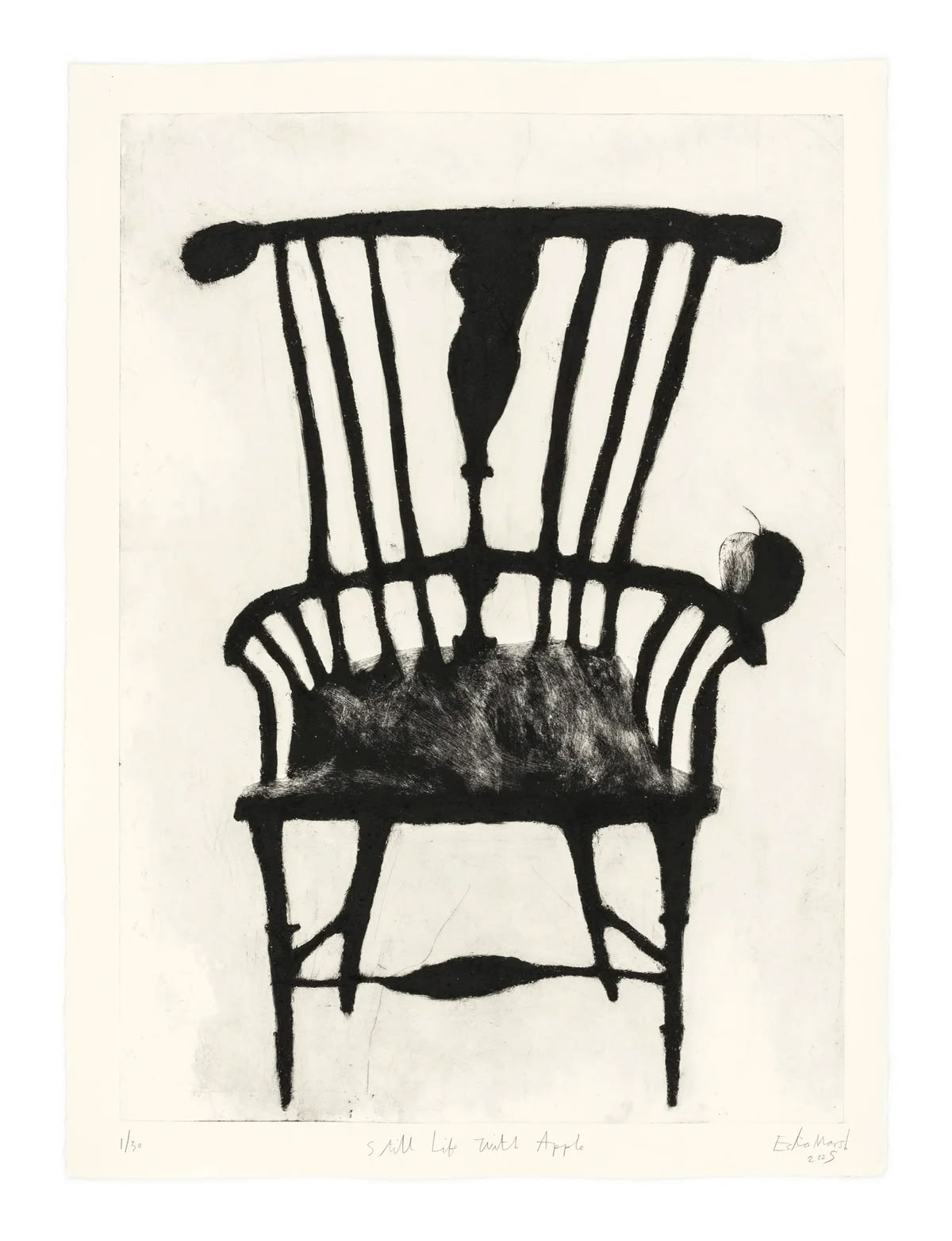
Image credit: Eska Marsh; ‘Still Life With Apple‘, 2025